Our Creator’s heart has always been for a once healthy relationship to be restored.
Through mighty signs and wonders in the form of 10 plagues, God revealed Himself not only to Pharaoh and the Egyptians but also to His people, Israel. Experiencing the first three plagues with Egypt was enough proof to Israel of the POWER and MIGHT of their God. It brought hope to suppressed people who trusted in the hand of the deliverance of their Creator. With hope and trust, they could start to rebuild a relationship with their King.
No longer did they doubt in Moses being His agent; they were willing to do what it takes to follow His instructions to get out of slavery. Under the guidance of Moses, they still struggled with the same problem most of humanity still faces today. They did not fear God; they heard the tales told by their parents, saw His hand in the plagues, but did not fear Him yet.
What did it take in our lives to truly fear Him? Do we know what it means to fear Him? By fear, I do not mean an unpleasant emotion caused by the threat of danger, pain, or harm. Not fear of the possibility of eternal hell, punishment and suffering if you do not obey.
To fear God is a positive and not a negative expression of your relationship with the Almighty Creator and King of the Universe.
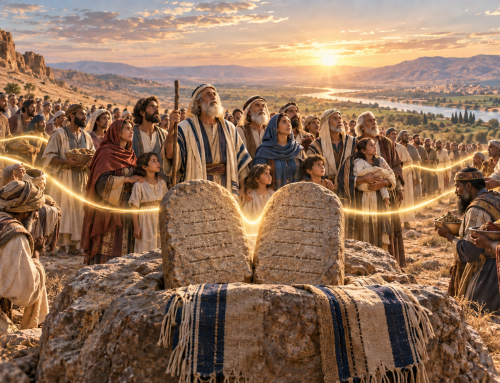
The fear of God in Israel’s life after Egypt started at Mount Sinai. Here, they experienced His presence, not just signs, wonders and miracles.
His presence came down on the mountain with a demonstration of His POWER. It was like all “natural disasters” at once. No wonder insurance policies refer to natural disasters as acts of God.
It felt like a massive earthquake as the mountain and surroundings trembled in the presence of the Almighty. The earthquake was accompanied by a type of cyclone as storm winds blew, accompanied by lightning. Like a volcano, the mountain was on fire and covered with a thick cloud.
And then, as if these were merely background sounds, He called out to Moses in a loud voice and asked him to come up the mountain.
Moses was instructed to go down and tell the people and even the priests not to try to break through the barrier at the foot of the mountain. Even though they prepared themselves and washed for 3 days, they would surely die if they come into His holy presence. Only Moses and the High Priest, Aaron, were allowed to break through the barrier and come into the manifested presence of the Almighty.
Israel experienced a negative fear at first, begging Moses not to let God speak to them again directly. They respected the boundary that was put in place and knew without doubt that the boundary was there for their protection.
They lived at the foot of this mountain, and negative fear, where their safety was their focus, was slowly turning into fear of God. Respect and reverence formed the foundation for their relationship with Him. They were ready for Him to come and dwell in their midst.
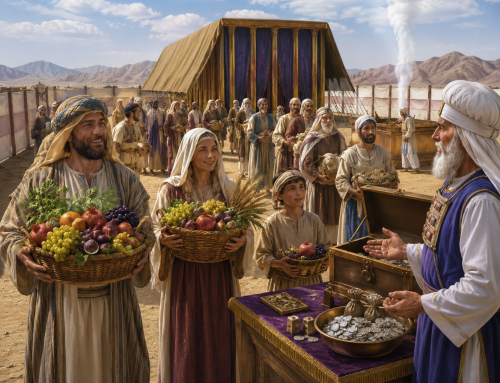
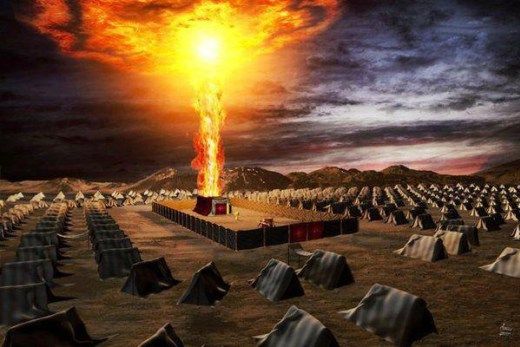
Let us skip forward to this week’s Torah piece. In Exodus 40:34–38, they finished the building of the Tabernacle exactly as instructed by God through His prophet Moses. And then it happened: The presence of the Almighty moved from the mountain to the Tabernacle. It is not described as when He descended on the mountain—no earthquake, no thunder, no loud noise. It was just the cloud of His presence that moved. No longer is He on the outskirts of the camp on top of a mountain, but now He is in their midst. 
The cloud was not just an umbrella over the tent. Not like a location pin—the familiar red dot we find on Google Maps pointing to a location.
On the mountain, He had to reveal Himself in might for them to understand the fear of Adonai. A mountain where only Moses and Aaron could come close to His presence. A place where He talked to His people via Moses, His prophet.
Now things have changed. A healthy relationship is being restored. They got to know and fear Him, they had respect and knew the boundaries without the need for a fence to keep them out.
He moved into their midst. There is no record of His strength or might, only of His love, mercy, kindness, protection, and character.
The cloud is now over the tabernacle by day to draw those in need of shade closer, and a pillar of fire at night to provide light and warmth in a cold desert at night. Being close to His presence was no longer threatening or scary; it did not cause negative feelings of fear.
They knew Him and had a positive fear or respect for Him. They were willing to move when He moved and camp where He settled without a need to question why or give opinions on better-suited locations.
The questions that come to mind if I ponder on this is:
Do we know the boundaries?
Do we truly fear Him?
Do we truly respect Him as the ALMIGHTY God?
Do we serve Him to secure our place in heaven, or do we serve Him for who He is?
Do we see Him as kind of our equal, our friend, and even our servant?
Is He there to give us what we ask for, or is He our provider, the one we thank for what we have not demanded?
Is He there for us to vent our anger and disappointment to, or is He the one we cry out to for comfort?
In summary, who is the focus, or God, in our relationship? Do we fear for our lives or have reverence or fear for who He is?
The Word says the fear of God is the beginning of wisdom. The Wisdom from above is first pure, then peaceable, gentle, and easy to be intreated, full of mercy and good fruits, without partiality, and without hypocrisy.
After we master fearing God, His Spirit shall rest upon us and will be visible as we display it and live it out to the world through our works. We will reflect His image and be worthy image bearers as the spirit or Wisdom, Understanding, Counsil, Might, Knowledge, and Fear of the Lord guide us in all our actions and reactions. Guide us in how to live a Kingdom live within the boundaries of the Kingdom rules written in His Word.
All to the glory of our Creator, King and Father.

- The Oath That Made a People : Nitzavim September 17, 2026A commentary on Parashah Nitzavim (Deuteronomy 29:9–30:20) Scripture quotations are from the American Standard Version (1901). Verse numbers in Deuteronomy follow the Hebrew text; English Bibles run one verse higher in this section. 1. Standing in a covenant that was sworn before you were born Nitzavim opens with Israel standing — nitzavim — […]
- Ha’azinu: Luister na die Lied van die Rots September 17, 2026Die naam Ha’azinu beteken “Luister!” Hierdie Torahgedeelte, Deuteronomium 32, bevat die lied wat Moses kort voor sy dood aan Israel geleer het. Dit herinner die volk aan YHVH se trou, waarsku hulle teen geestelike afvalligheid en eindig met die hoop op herstel en versoening. Moses begin deur sy woorde met reën en dou […]
- STAAN, KIES EN WANDEL : NITZAVIM – VAYELECH August 29, 2026Nitzavim–Vayelech : Deuteronomium 29:10–31:30 Hierdie week lees ons ’n dubbele Torah-gedeelte, Nitzavim en Vayelech, en saam bring hierdie twee gedeeltes ons by een van die aangrypendste oomblikke in die Torah. In Nitzavim–Vayelech staan Israel op die vlaktes van Moab. Die woestynreis is amper verby. Die Beloofde Land lê voor hulle. Moses weet dat […]
- WANNEER JY INKOM – KI TAVO August 24, 2026DIE KERN BOODSKAPPE VAN KI TAVO: Onthou waaruit YHVH jou gebring het, wees dankbaar vir waar Hy jou gebring het, en wanneer jy Sy seën binnestap, moenie die Gewer vergeet nie. Ki Tavo (כִּי־תָבוֹא) beteken “Wanneer jy inkom.” Israel staan op die punt om die Beloofde Land binne te gaan. Ná jare in […]
- WANNEER GELOOF DEEL WORD VAN JOU ALLEDAAGSE LEWE – KI TETZE August 16, 2026Ki Tetze (כִּי־תֵצֵא) beteken “Wanneer jy uittrek” of “Wanneer jy uitgaan.” Hierdie Torah-gedeelte bevat meer gebooie as enige ander porsie en raak ’n verstommende verskeidenheid aspekte van die alledaagse lewe aan: gesinsverhoudings, die huwelik, werk, geregtigheid, die versorging van kwesbares, eerlikheid in besigheid, goedheid teenoor diere en selfs die terugbesorging van iets wat verlore […]
- SHOFTIM – WIE REGEER MY HART? August 11, 2026Die woorde waarmee hierdie gedeelte begin, bly deur die eeue heen weerklink: “Geregtigheid, geregtigheid moet jy najaag.” Deuteronomium 16:20 Shoftim (שֹׁפְטִים) beteken “regters”. Israel staan op die drumpel van die Beloofde Land, en YHVH leer hulle dat dit nie genoeg is om die land bloot in besit te neem nie. Hulle moet daarin […]
- Kies Lewe deur die Koning te Volg – Parasha Re’eh August 5, 2026"Kyk (Re'eh), Ek hou vandag voor julle die seën en die vloek." (Deut 11:26) Die eerste woord van hierdie week se Parasha is Re'eh, wat beteken "Kyk!" Dit is merkwaardig dat Moses die volk in die enkelvoud aanspreek. Al staan die hele volk voor hom, spreek hy elke persoon individueel aan. Elkeen moes […]
- Walking in the Footsteps of Covenant – Ekev July 27, 2026The Hebrew word Ekev (עקב) literally means heel or because. It carries the beautiful picture of following in someone's footsteps. Just as a heel leaves a footprint behind, Israel was called to walk in the footsteps of YHVH's covenant. The blessings described in this parashah were not random rewards, but the natural fruit of […]
- The Heart That Hears : Va’etchanan July 20, 2026The name Va'etchanan, meaning "I pleaded" or "I earnestly sought favor," reflects Moses' heartfelt plea to YHVH from the plains of Moab, begging to enter the Promised Land. Despite Elohim's loving refusal, Moses, rather than dwelling on his disappointment, dedicates his final days to preparing the Israelites for a future he will not witness. […]
- From Tears to Hope : The month of Av July 16, 2026The month of Av is one of the most significant months on the biblical calendar. At first glance it seems to be marked by sorrow, yet beneath its ashes lies a remarkable promise of restoration. Historically, the Ninth of Av (Tisha B'Av) became a day associated with national tragedy. Jewish tradition remembers that […]