The month of Av is one of the most significant months on the biblical calendar. At first glance it seems to be marked by sorrow, yet beneath its ashes lies a remarkable promise of restoration.
Historically, the Ninth of Av (Tisha B’Av) became a day associated with national tragedy. Jewish tradition remembers that on this day the generation in the wilderness accepted the evil report of the spies and refused to enter the Promised Land (Numbers 13 to 14). Centuries later, both Solomon’s Temple and the Second Temple were destroyed on or near this same date. The Bar Kokhba revolt was brutally crushed by the Romans, the Roman emperor Hadrian plowed over the Temple Mount to build a pagan city and temple in its place, King Edward I signed the Edict of Expulsion, banishing all Jews from England in 1290, the Alhambra Decree went into effect, giving Jews an ultimatum to convert or face expulsion from Spain in 1492, mass deportations of Jews from the Warsaw Ghetto to the Treblinka extermination camp began 1942. Through the centuries, these painful events became linked with Av, making it a season of remembering exile, loss, and the consequences of turning away from YHVH.
Yet the prophets never leave Israel in despair.
Jeremiah, who witnessed Jerusalem’s destruction, also proclaimed that YHVH would make a New Covenant with the house of Israel and the house of Judah (Jeremiah 31:31 to 34). Ezekiel foresaw the day when YHVH would gather His scattered people, give them a new heart, and place His Spirit within them (Ezekiel 36:24 to 28). What appeared to be an ending was, in Elohim’s plan, the beginning of restoration.
For believers in Messiah Yeshua, Av points us to an even greater hope. Yeshua wept over Jerusalem, knowing its coming destruction, yet He also opened the way for reconciliation through His sacrifice. Through Him, brokenness is not the final chapter. The same Elohim who judges sin is faithful to restore all who return to Him with humble hearts.
The month of Av reminds us that YHVH specialises in turning mourning into joy, ashes into beauty, and exile into homecoming. Every apparent setback in our lives can become a doorway to His greater purposes when we trust Him.
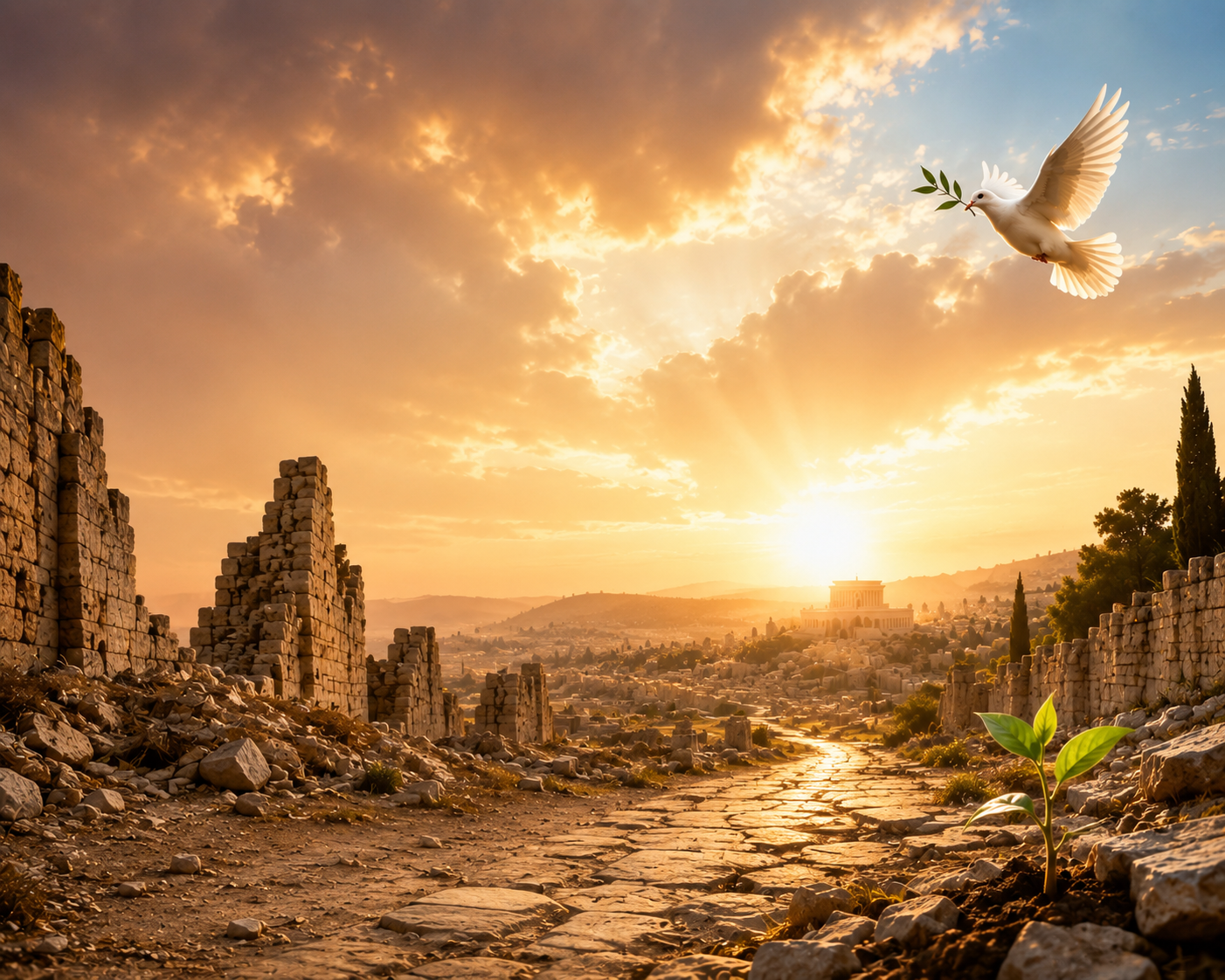
As you journey through Av, do not focus only on the ruins.
Lift your eyes to the promises.
The Elohim who preserved Israel through every generation is still building, restoring, and fulfilling His covenant today.
In Messiah, hope always has the final word.
“Those who sow in tears shall reap with songs of joy.” (Psalm 126:5)
May this month of Av deepen our faith as we look forward to the complete restoration that YHVH has promised through Messiah Yeshua.
All to the Glory of our King !

- Vayera: The Promised Son and the Elohim Who Provides October 25, 2026Central message in Vayera: YHVH reveals Himself as the One who sees, visits, judges, shows mercy and fulfills what appears impossible. The promised son is born, Abraham intercedes for the wicked, and on Mount Moriah YHVH provides a substitute—leaving powerful breadcrumbs that lead toward Yeshua. The Original Setting Vayera means “And He appeared.” […]
- Lech Lecha: Following the Call Back to the Promise October 17, 2026Central message: YHVH calls Abram out of his familiar world and leads him toward an unseen promise. Through Abram’s faith journey, YHVH begins reversing the scattering, curse and separation introduced in the opening chapters of Genesis. His purpose is not merely to bless one man, but to bring blessing to all the families of […]
- Noach: Through the Waters Toward Restoration October 10, 2026Central message: YHVH judges a world filled with violence, preserves life through Noach, and renews His covenant purpose. Yet the flood changes the world without changing the human heart. Humanity still needs more than another beginning—it needs inward renewal through Yeshua. The Original Setting Parashat Noach contains three major movements: The flood: Creation […]
- B’reisheet: From Darkness to Eden October 5, 2026B’reisheet introduces the great storyline of Scripture: Elohim creates a good world, humanity is called to bear His image, sin brings exile and death, yet YHVH immediately begins revealing His plan of redemption and restoration through Yeshua. The Original Setting B’reisheet contains several foundational events: Elohim creates the heavens and the earth. Light […]
- The Oath That Made a People : Nitzavim September 17, 2026A commentary on Parashah Nitzavim (Deuteronomy 29:9–30:20) Scripture quotations are from the American Standard Version (1901). Verse numbers in Deuteronomy follow the Hebrew text; English Bibles run one verse higher in this section. 1. Standing in a covenant that was sworn before you were born Nitzavim opens with Israel standing — nitzavim — […]
- Ha’azinu: Luister na die Lied van die Rots September 17, 2026Die naam Ha’azinu beteken “Luister!” Hierdie Torahgedeelte, Deuteronomium 32, bevat die lied wat Moses kort voor sy dood aan Israel geleer het. Dit herinner die volk aan YHVH se trou, waarsku hulle teen geestelike afvalligheid en eindig met die hoop op herstel en versoening. Moses begin deur sy woorde met reën en dou […]
- STAAN, KIES EN WANDEL : NITZAVIM – VAYELECH August 29, 2026Nitzavim–Vayelech : Deuteronomium 29:10–31:30 Hierdie week lees ons ’n dubbele Torah-gedeelte, Nitzavim en Vayelech, en saam bring hierdie twee gedeeltes ons by een van die aangrypendste oomblikke in die Torah. In Nitzavim–Vayelech staan Israel op die vlaktes van Moab. Die woestynreis is amper verby. Die Beloofde Land lê voor hulle. Moses weet dat […]
- WANNEER JY INKOM – KI TAVO August 24, 2026DIE KERN BOODSKAPPE VAN KI TAVO: Onthou waaruit YHVH jou gebring het, wees dankbaar vir waar Hy jou gebring het, en wanneer jy Sy seën binnestap, moenie die Gewer vergeet nie. Ki Tavo (כִּי־תָבוֹא) beteken “Wanneer jy inkom.” Israel staan op die punt om die Beloofde Land binne te gaan. Ná jare in […]
- WANNEER GELOOF DEEL WORD VAN JOU ALLEDAAGSE LEWE – KI TETZE August 16, 2026Ki Tetze (כִּי־תֵצֵא) beteken “Wanneer jy uittrek” of “Wanneer jy uitgaan.” Hierdie Torah-gedeelte bevat meer gebooie as enige ander porsie en raak ’n verstommende verskeidenheid aspekte van die alledaagse lewe aan: gesinsverhoudings, die huwelik, werk, geregtigheid, die versorging van kwesbares, eerlikheid in besigheid, goedheid teenoor diere en selfs die terugbesorging van iets wat verlore […]
- SHOFTIM – WIE REGEER MY HART? August 11, 2026Die woorde waarmee hierdie gedeelte begin, bly deur die eeue heen weerklink: “Geregtigheid, geregtigheid moet jy najaag.” Deuteronomium 16:20 Shoftim (שֹׁפְטִים) beteken “regters”. Israel staan op die drumpel van die Beloofde Land, en YHVH leer hulle dat dit nie genoeg is om die land bloot in besit te neem nie. Hulle moet daarin […]