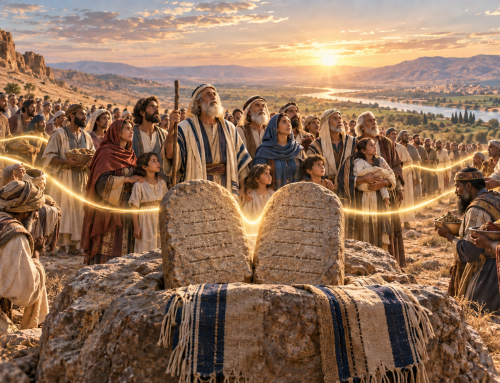
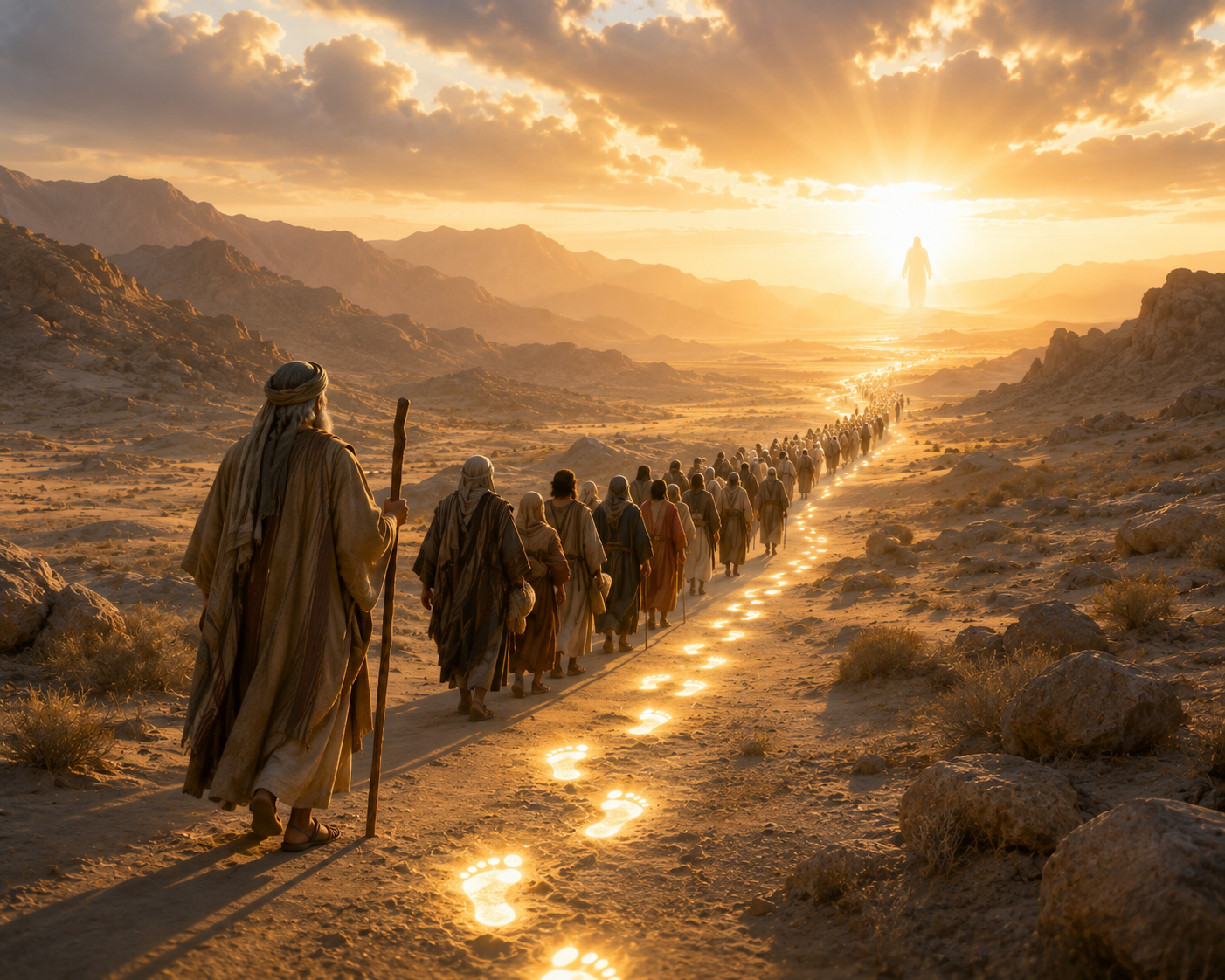
The Hebrew word Ekev (עקב) literally means heel or because. It carries the beautiful picture of following in someone’s footsteps. Just as a heel leaves a footprint behind, Israel was called to walk in the footsteps of YHVH’s covenant. The blessings described in this parashah were not random rewards, but the natural fruit of a people choosing to walk faithfully with their Elohim.
In Ekev, Moses reminds Israel that the covenant is founded on YHVH’s faithfulness. He loved them, chose them, and redeemed them from Egypt, not because they were the greatest nation, but because of His steadfast love and His promises to Abraham, Isaac, and Jacob. Their obedience would become the visible evidence that they trusted the One who has already saved them.
For believers this theme reaches its fullness in Yeshua. Salvation is never earned by obedience, but covenant obedience flows from hearts that have already been redeemed. Yeshua expressed this beautifully:
“If you love Me, keep My commandments.” (John 14:15)
Obedience is therefore not a ladder by which we climb to heaven, but the footprints of those who are already walking with their Shepherd.
One of the central lessons in Ekev comes from Israel’s wilderness journey:
“Man does not live by bread alone, but by every word that proceeds from the mouth of YHVH.” (Deuteronomy 8:3)
When Yeshua was tempted in the wilderness, these very words became His answer to the adversary (Matthew 4:4). Israel often grumbled when bread seemed scarce, but Yeshua demonstrated complete dependence upon the Father’s Word. Physical provision is important, but spiritual nourishment sustains eternal life. Every disciple is invited to feed daily upon the Scriptures and upon the Messiah, who is the Living Word.
Moses also warns Israel not to forget YHVH when prosperity arrives.
The greatest danger has never been the wilderness but abundance.
Full stomachs can easily produce empty hearts. Success can quietly replace dependence, leading people to believe, “My power and the strength of my hand has gained me this wealth.”
How relevant this warning remains today. Modern comfort can become a subtle idol. Technology, careers, financial security, and personal achievement can slowly replace prayer, gratitude, and trust. Ekev calls believers to remember that every blessing originates from the gracious hand of Elohim.
The famous declaration of the Shema appears in this portion:
“Hear, O Israel: YHVH our Elohim, YHVH is One.” (Deuteronomy 6:4, echoed in Ekev’s continued teaching)
This confession is not merely theological. It demands wholehearted love expressed through everyday life. Moses urges the people to keep God’s words in their hearts, teach it to their children, and allow every aspect of life to reflect covenant faithfulness.
The New Covenant writes these same instructions upon believing hearts through the work of the Ruach HaKodesh. Instead of obedience being external only, it becomes an inward transformation where love for YHVH naturally produces lives that honour Him.
Ekev closes with a wonderful promise. As Israel walks faithfully, YHVH Himself goes before them. Victory is never achieved by human strength but by His presence. The same promise belongs to every disciple of Messiah. We do not walk alone. The One who called us also walks ahead of us, making a path where there seems to be none.
May we become people who faithfully walk in His footsteps, remembering His goodness in every season. Whether in wilderness or abundance, may our lives declare that our true nourishment is His Word, our confidence is His faithfulness, and our greatest blessing is simply to walk with Yeshua each day.
“The steps of a righteous person are established by YHVH, and He delights in his way.” (Psalm 37:23)
All to the Glory or our King!

- B’reisheet: From Darkness to Eden October 5, 2026B’reisheet introduces the great storyline of Scripture: Elohim creates a good world, humanity is called to bear His image, sin brings exile and death, yet YHVH immediately begins revealing His plan of redemption and restoration through Yeshua. The Original Setting B’reisheet contains several foundational events: Elohim creates the heavens and the earth. Light […]
- The Oath That Made a People : Nitzavim September 17, 2026A commentary on Parashah Nitzavim (Deuteronomy 29:9–30:20) Scripture quotations are from the American Standard Version (1901). Verse numbers in Deuteronomy follow the Hebrew text; English Bibles run one verse higher in this section. 1. Standing in a covenant that was sworn before you were born Nitzavim opens with Israel standing — nitzavim — […]
- Ha’azinu: Luister na die Lied van die Rots September 17, 2026Die naam Ha’azinu beteken “Luister!” Hierdie Torahgedeelte, Deuteronomium 32, bevat die lied wat Moses kort voor sy dood aan Israel geleer het. Dit herinner die volk aan YHVH se trou, waarsku hulle teen geestelike afvalligheid en eindig met die hoop op herstel en versoening. Moses begin deur sy woorde met reën en dou […]
- STAAN, KIES EN WANDEL : NITZAVIM – VAYELECH August 29, 2026Nitzavim–Vayelech : Deuteronomium 29:10–31:30 Hierdie week lees ons ’n dubbele Torah-gedeelte, Nitzavim en Vayelech, en saam bring hierdie twee gedeeltes ons by een van die aangrypendste oomblikke in die Torah. In Nitzavim–Vayelech staan Israel op die vlaktes van Moab. Die woestynreis is amper verby. Die Beloofde Land lê voor hulle. Moses weet dat […]
- WANNEER JY INKOM – KI TAVO August 24, 2026DIE KERN BOODSKAPPE VAN KI TAVO: Onthou waaruit YHVH jou gebring het, wees dankbaar vir waar Hy jou gebring het, en wanneer jy Sy seën binnestap, moenie die Gewer vergeet nie. Ki Tavo (כִּי־תָבוֹא) beteken “Wanneer jy inkom.” Israel staan op die punt om die Beloofde Land binne te gaan. Ná jare in […]
- WANNEER GELOOF DEEL WORD VAN JOU ALLEDAAGSE LEWE – KI TETZE August 16, 2026Ki Tetze (כִּי־תֵצֵא) beteken “Wanneer jy uittrek” of “Wanneer jy uitgaan.” Hierdie Torah-gedeelte bevat meer gebooie as enige ander porsie en raak ’n verstommende verskeidenheid aspekte van die alledaagse lewe aan: gesinsverhoudings, die huwelik, werk, geregtigheid, die versorging van kwesbares, eerlikheid in besigheid, goedheid teenoor diere en selfs die terugbesorging van iets wat verlore […]
- SHOFTIM – WIE REGEER MY HART? August 11, 2026Die woorde waarmee hierdie gedeelte begin, bly deur die eeue heen weerklink: “Geregtigheid, geregtigheid moet jy najaag.” Deuteronomium 16:20 Shoftim (שֹׁפְטִים) beteken “regters”. Israel staan op die drumpel van die Beloofde Land, en YHVH leer hulle dat dit nie genoeg is om die land bloot in besit te neem nie. Hulle moet daarin […]
- Kies Lewe deur die Koning te Volg – Parasha Re’eh August 5, 2026"Kyk (Re'eh), Ek hou vandag voor julle die seën en die vloek." (Deut 11:26) Die eerste woord van hierdie week se Parasha is Re'eh, wat beteken "Kyk!" Dit is merkwaardig dat Moses die volk in die enkelvoud aanspreek. Al staan die hele volk voor hom, spreek hy elke persoon individueel aan. Elkeen moes […]
- Walking in the Footsteps of Covenant – Ekev July 27, 2026The Hebrew word Ekev (עקב) literally means heel or because. It carries the beautiful picture of following in someone's footsteps. Just as a heel leaves a footprint behind, Israel was called to walk in the footsteps of YHVH's covenant. The blessings described in this parashah were not random rewards, but the natural fruit of […]
- The Heart That Hears : Va’etchanan July 20, 2026The name Va'etchanan, meaning "I pleaded" or "I earnestly sought favor," reflects Moses' heartfelt plea to YHVH from the plains of Moab, begging to enter the Promised Land. Despite Elohim's loving refusal, Moses, rather than dwelling on his disappointment, dedicates his final days to preparing the Israelites for a future he will not witness. […]