Central message: Jacob leaves the promised land as a frightened fugitive, but YHVH meets him in an ordinary place and reveals a stairway joining heaven and earth. During twenty difficult years in exile, Jacob is deceived, disciplined, blessed and given a family. YHVH remains faithful, transforming the fugitive and leading him home.
- The Original Setting
Vayetzei means “And he went out.”
Jacob leaves Beersheba and travels toward Haran after receiving Isaac’s blessing and provoking Esau’s anger.
The parashah includes:
- Jacob’s dream of the stairway at Bethel.
- YHVH confirming the Abrahamic covenant to Jacob.
- Jacob setting up and anointing a stone pillar.
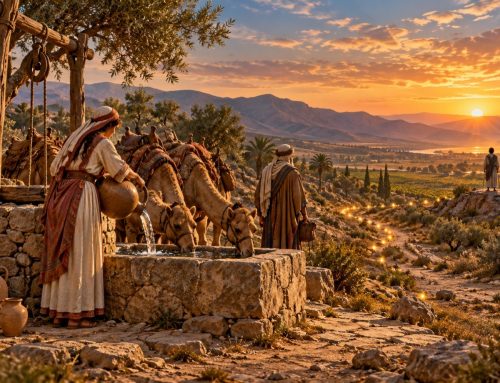
- Jacob meeting Rachel at the well.
- Jacob serving Laban for Rachel.
- Laban deceiving Jacob by giving him Leah first.
- Jacob marrying Leah and Rachel.
- The birth of eleven sons and Dinah.
- Conflict between Leah and Rachel.
- Jacob’s livestock increasing despite Laban’s manipulation.
- YHVH commanding Jacob to return home.
- Rachel stealing Laban’s household idols.
- Laban pursuing Jacob.
- Jacob and Laban making a boundary covenant.
- Angels meeting Jacob as he approaches the promised land.
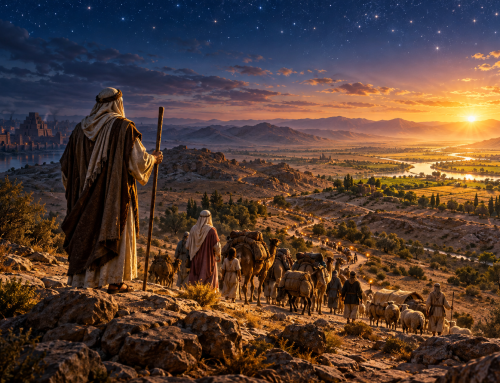
Jacob leaves alone with little more than a staff. He returns with wives, children, servants and livestock. Yet his greatest change is not material—YHVH is shaping his character.
- Leaving the Promised Land
Jacob possesses the covenant blessing, but he must leave the land connected with that blessing.
His departure is partly the consequence of family deception and conflict. He obtained the blessing, but he cannot remain at home to enjoy it.
Jacob’s journey resembles exile:
- He leaves the land.
- He is separated from his family.
- He enters the service of a foreign master.
- He experiences oppression and deception.
- YHVH preserves him.
- YHVH eventually calls him home.
This pattern later appears in Israel’s national story.
Jacob’s life becomes a small picture of Israel: exile, preservation, multiplication and return.
- A Stone for a Pillow
Jacob stops for the night at what appears to be an ordinary place. He has no altar, tent or visible sign of YHVH’s presence.
He places a stone beneath or near his head and sleeps.
This is Jacob at his most vulnerable:
- Alone
- Displaced
- Uncertain
- Unable to control what lies ahead
- Carrying the consequences of his choices
Yet this becomes the place where YHVH reveals Himself.
Jacob may have left his home, but he has not left the presence or covenant faithfulness of YHVH.
- The Stairway Between Heaven and Earth
Jacob dreams of a stairway or ramp standing upon the earth, with its top reaching into heaven. Messengers of Elohim ascend and descend upon it.
The dream reveals that heaven and earth are not permanently separated. YHVH is establishing communication and connection between His dwelling and the human realm.
Above the stairway, YHVH confirms:
- The promise of the land
- The multiplication of Jacob’s descendants
- Blessing to all the families of the earth
- His presence with Jacob
- Protection during the journey
- Jacob’s eventual return
YHVH does not give Jacob these promises because Jacob has earned them. They rest upon covenant faithfulness and grace.
- The Eden Connection
Heaven and earth meet again
Eden was the place where YHVH’s presence and earthly creation met. Humanity’s sin resulted in exile from that sacred space.
At Bethel, Jacob sees a renewed connection between heaven and earth.
The stairway becomes a breadcrumb pointing toward YHVH’s intention to restore fellowship with humanity.
Exile and return
Adam and Chavah were driven from Eden. Cain went out from YHVH’s presence. Humanity was scattered at Babel.
Jacob also leaves the land, but YHVH promises to bring him back.
Vayetzei reveals that exile is not necessarily the end of the story. YHVH seeks, preserves and restores.
The guarded way
Cherubim guarded the way to the Tree of Life after humanity’s exile from Eden. At the beginning and end of Jacob’s exile, heavenly messengers appear.
They remind us that Jacob’s journey is taking place within a larger heavenly purpose. YHVH’s unseen presence surrounds the covenant story.
- Bethel: The House of Elohim
When Jacob wakes, he says:
“Surely YHVH is in this place, and I did not know it.”
He names the place Bethel—House of Elohim and calls it the gate of heaven.
Jacob’s statement reveals that his awareness was lacking—not YHVH’s presence.
YHVH had been present before Jacob recognised Him.
Jacob takes the stone, sets it upright and pours oil upon it. The ordinary stone becomes a memorial of revelation and covenant promise.
Bethel later becomes an important place in Israel’s history, although it also eventually becomes corrupted by idolatry. A place of genuine encounter must never become a substitute for continued obedience.
- Jacob’s Vow
Jacob responds to YHVH’s unconditional promises with a vow:
“If Elohim will be with me, and keep me in this way…”
His response sounds cautious and conditional. Jacob is only beginning to learn personal trust.
He had grown up in the covenant household, but now he must encounter YHVH for himself.
Jacob’s faith will develop gradually. YHVH meets him where he is but does not leave him unchanged.
Faith sometimes begins imperfectly, but YHVH patiently forms it through the journey.
- Rachel at the Well
Jacob arrives in the land of the east and meets shepherds gathered near a well.
When Rachel arrives with her father’s sheep, Jacob removes the stone from the well and waters the flock.
Wells are places of divine encounter in Genesis:
- Hagar encounters YHVH near a spring.
- Abraham’s servant meets Rebekah at a well.
- Jacob meets Rachel at a well.
The well represents life, provision and the unfolding of covenant relationships.
Jacob weeps when he meets Rachel, perhaps from relief, family connection and recognition that YHVH has guided his journey.
- The Deceiver Is Deceived
Jacob agrees to serve Laban for seven years in exchange for Rachel.
The years seem short because of his love for her. But after the wedding feast, Laban substitutes Leah for Rachel.
Jacob, who deceived his father through clothing, darkness and mistaken identity, is now deceived in the darkness through a hidden identity.
Laban explains:
“It must not be done so in our country, to give the younger before the firstborn.”
The words confront Jacob with the very issue at the centre of his earlier deception—the place of the firstborn.
YHVH is not merely punishing Jacob. He is allowing Jacob to experience the pain deception causes so that his character can be transformed.
- Leah: Seen by YHVH
Leah is described as unloved or less loved. She lives in the shadow of Rachel, the woman Jacob desired.
But YHVH sees Leah’s pain and opens her womb.
Her sons’ names reveal her emotional journey:
- Reuben: “YHVH has seen my affliction.”
- Simeon: “YHVH has heard that I am unloved.”
- Levi: “Now my husband will become attached to me.”
- Judah: “This time I will praise YHVH.”
At first Leah hopes that bearing sons will cause Jacob to love her. By Judah’s birth, her focus begins shifting from seeking Jacob’s approval toward praising YHVH.
The woman who feels unseen becomes the mother of Levi, the priestly tribe, and Judah, the tribe of kings and Messiah.
Human rejection cannot prevent YHVH from giving purpose and honour.
- Rachel: Loved but Barren
Rachel is deeply loved by Jacob, but she cannot initially bear children.
Leah has children but longs for love. Rachel has love but longs for children.
Each sister looks at what the other possesses and feels incomplete.
Their rivalry shows how comparison can turn blessings into sources of pain.
Rachel eventually cries:
“Give me children, or else I die!”
Jacob responds angrily, recognising that he is not in the place of Elohim.
The parashah shows how uncontrolled longing can become an idol. Even a good desire can begin ruling the heart when we believe we cannot live without it.
- The Building of Israel’s House
Through Leah, Rachel, Bilhah and Zilpah, Jacob’s family grows.
The family is formed amid:
- Love and rejection
- Faith and manipulation
- Prayer and jealousy
- Competition and pain
- Human weakness and divine faithfulness
YHVH does not approve of every action within the household. Yet He continues building the family through whom His covenant purposes will unfold.
This is a profound demonstration of grace. Israel’s beginnings are not presented as flawless. The nation exists because YHVH remains faithful in the middle of human brokenness.
- The Birth of Joseph
At last, YHVH remembers Rachel and opens her womb.
She gives birth to Joseph.
The phrase “Elohim remembered Rachel” does not mean He had forgotten her. It means He acts according to His covenant care.
Joseph’s name expresses both removal and hope:
- YHVH has taken away Rachel’s reproach.
- May YHVH add another son.
Joseph will later play a central role in preserving Jacob’s entire family during famine.
A child born after long waiting becomes an instrument of future salvation.
- Jacob and the Flocks
Jacob asks permission to return home, but Laban wants him to remain because he recognises that YHVH has blessed him through Jacob.
Laban repeatedly changes Jacob’s wages. Yet YHVH causes Jacob’s flocks to increase.
The account involving the rods and breeding practices may reflect Jacob’s understanding of animal husbandry, but Genesis later makes the true source of his prosperity clear: YHVH saw Laban’s treatment of Jacob and transferred the increase to him.
Jacob’s blessing does not ultimately come from clever techniques. It comes from YHVH’s protection and faithfulness.
- YHVH Calls Jacob Home
After twenty years, YHVH says:
“Return to the land of your fathers and to your family, and I will be with you.”
The Elohim who told Jacob at Bethel that He would bring him back now calls him to begin the return.
Jacob explains to Leah and Rachel how Laban mistreated him and how YHVH protected him.
Significantly, Leah and Rachel agree to leave their father’s household. Like Rebekah before them, they must depart from the familiar world to enter the covenant land.
The call to return requires action. Jacob cannot remain in exile after YHVH says it is time to go home.
- Rachel and the Household Idols
Before leaving, Rachel steals Laban’s household idols.
Her motives are not explained fully. They may have involved:
- Inheritance rights
- Protection
- A desire to weaken her father’s authority
- Continued attachment to her household’s spiritual practices
Whatever the reason, the idols reveal that leaving Laban’s household physically does not mean every influence of that household has been left behind.
Later, Jacob will command his household to remove foreign gods before returning to Bethel.
Restoration requires more than geographical movement. Idols from the old life must also be surrendered.
- The Boundary at Mizpah
Laban pursues Jacob, but YHVH warns him in a dream not to harm Jacob.
After confrontation, Jacob and Laban establish a covenant boundary marked by a heap of stones.
Mizpah is sometimes used sentimentally as though it were a blessing between close friends:
“May YHVH watch between you and me…”
In context, it functions more as a boundary between two men who do not trust one another. YHVH is called as a witness to ensure that neither crosses the boundary to cause harm.
The account teaches that peace sometimes requires clear, recognised boundaries.
Forgiveness does not always mean returning to an unsafe or manipulative relationship without limits.
- The Angels at Mahanaim
As Jacob continues toward the promised land, messengers of Elohim meet him.
He names the place Mahanaim—Two Camps.
At Bethel, heavenly messengers appeared when Jacob was leaving the land. At Mahanaim, they appear as he returns.
Their presence forms a heavenly frame around his years of exile.
Jacob was never alone. Even when he could not see YHVH’s protection, the covenant journey remained under divine supervision.
- The Prophetic Thread
Israel in exile
Jacob’s story anticipates Israel’s later history:
- Israel leaves the land.
- Serves foreign rulers.
- Experiences oppression.
- Multiplies in exile.
- Is preserved by YHVH.
- Is called to return.
- Must remove foreign gods.
The prophets repeatedly promise that YHVH will gather Jacob’s descendants from the nations and bring them home.
YHVH’s faithfulness to the unloved
The prophets describe YHVH as the One who sees the afflicted, gathers the rejected and restores those who feel forgotten.
Leah’s story reflects this character. The woman who was not chosen by Jacob was seen and given an honoured place in YHVH’s redemptive plan.
The return to Bethel
The prophets call Israel not merely to return to the land but to return to YHVH.
Physical restoration without spiritual faithfulness is incomplete.
Jacob must eventually return to the place of his first encounter, fulfil his vow and remove the idols within his household.
- The New Testament Connection
Yeshua: The true connection between heaven and earth
Yeshua refers directly to Jacob’s dream when He tells Nathanael:
“You will see heaven opened, and the angels of Elohim ascending and descending upon the Son of Man.”
— John 1:51
Yeshua identifies Himself as the reality toward which Jacob’s stairway pointed.
He is:
- The meeting place between heaven and earth
- The revelation of the Father
- The true dwelling of YHVH among humanity
- The way through whom we approach the Father
- The gate through which restoration comes
The stairway is not ultimately a method by which human beings climb to Elohim. YHVH takes the initiative and comes down to humanity through Yeshua.
Yeshua, the greater Bethel
Bethel means House of Elohim. John describes Yeshua as the Word who became flesh and “tabernacled” among us.
The presence of YHVH is no longer tied only to a geographical place. Yeshua is the true meeting place between Elohim and humanity.
Through the Ruach, believers also become a dwelling place of YHVH.
The Bridegroom who serves
Jacob serves fourteen years for his wives, particularly because of his love for Rachel.
While the comparison is not exact, it provides a glimpse of costly love.
Yeshua, the true Bridegroom, does not purchase His bride with years of labour or material wealth, but gives Himself for her.
He loves, cleanses and prepares His people for covenant union.
Yeshua sees the rejected
Leah’s experience reminds us of Yeshua’s ministry toward those overlooked by society.
He sees:
- The rejected
- The unloved
- The barren
- The outsider
- The person others fail to notice
The line of Messiah comes through Judah, the son born when Leah turns her praise toward YHVH.
YHVH brings royal and Messianic purpose through the life of a woman who felt unwanted.
Exile and homecoming
The New Testament describes believers as strangers and pilgrims who await their full inheritance.
Through Yeshua, those who were far away are brought near.
His work prepares the final homecoming, when YHVH will dwell with humanity and exile from Eden will be fully reversed.
- The Breadcrumbs Through Scripture
| Vayetzei | New Testament connection | Final restoration |
| Jacob leaves the promised land | Humanity lives in exile from YHVH’s presence | YHVH gathers His people home |
| Heaven opens above Jacob | Heaven opens upon Yeshua | Heaven and earth are united |
| The stairway connects heaven and earth | Yeshua is the way to the Father | YHVH dwells with humanity |
| Jacob names the place Bethel | Yeshua is the true dwelling of YHVH | Creation becomes YHVH’s dwelling |
| Jacob meets his bride at a well | Yeshua gives living water and gathers His bride | The bride lives beside the river of life |
| Leah is seen in her rejection | Yeshua welcomes the overlooked | Every wound and tear is healed |
| Jacob serves for his bride | Yeshua gives Himself for His bride | The marriage supper of the Lamb |
| Jacob’s family grows in exile | YHVH gathers a people among the nations | A multitude from every nation worships Him |
| Jacob is called to return | Yeshua brings those who are far away near | Exile ends forever |
| Angels meet Jacob on his return | Angels accompany the work and return of Messiah | YHVH’s kingdom fills creation |
Key Thought
Jacob thought he had left the place of blessing, but he discovered that YHVH was present even on the road of exile. Bethel reveals the great hope of Scripture: heaven and earth will not remain separated. Yeshua is the true stairway, the meeting place through whom humanity is brought home.


- Vayetzei: Heaven Opens on the Road of Exile November 16, 2026Central message: Jacob leaves the promised land as a frightened fugitive, but YHVH meets him in an ordinary place and reveals a stairway joining heaven and earth. During twenty difficult years in exile, Jacob is deceived, disciplined, blessed and given a family. YHVH remains faithful, transforming the fugitive and leading him home. The […]
- Toldot: Do Not Trade the Promise for a Bowl of Stew November 7, 2026Central message: Toldot follows the covenant promise into the next generation. Isaac and Rebekah face barrenness, their sons struggle before birth, Esau despises his birthright, and Jacob seeks the blessing through deception. The parashah reveals YHVH’s sovereign purpose, the value of covenant inheritance and the painful consequences of trying to obtain through human schemes […]
- Chayei Sarah: A Bride, a Promise and Life Beyond the Grave November 2, 2026Central message: Chayei Sarah begins with death, but it is filled with signs of continuing life. Sarah is buried in the promised land, a bride is found for Isaac, and the covenant moves into the next generation. YHVH’s promises continue even when faithful people die. The Original Setting Chayei Sarah means “The Life […]
- Vayera: The Promised Son and the Elohim Who Provides October 25, 2026Central message in Vayera: YHVH reveals Himself as the One who sees, visits, judges, shows mercy and fulfills what appears impossible. The promised son is born, Abraham intercedes for the wicked, and on Mount Moriah YHVH provides a substitute—leaving powerful breadcrumbs that lead toward Yeshua. The Original Setting Vayera means “And He appeared.” […]
- Lech Lecha: Following the Call Back to the Promise October 17, 2026Central message: YHVH calls Abram out of his familiar world and leads him toward an unseen promise. Through Abram’s faith journey, YHVH begins reversing the scattering, curse and separation introduced in the opening chapters of Genesis. His purpose is not merely to bless one man, but to bring blessing to all the families of […]
- Noach: Through the Waters Toward Restoration October 10, 2026Central message: YHVH judges a world filled with violence, preserves life through Noach, and renews His covenant purpose. Yet the flood changes the world without changing the human heart. Humanity still needs more than another beginning—it needs inward renewal through Yeshua. The Original Setting Parashat Noach contains three major movements: The flood: Creation […]
- B’reisheet: From Darkness to Eden October 5, 2026B’reisheet introduces the great storyline of Scripture: Elohim creates a good world, humanity is called to bear His image, sin brings exile and death, yet YHVH immediately begins revealing His plan of redemption and restoration through Yeshua. The Original Setting B’reisheet contains several foundational events: Elohim creates the heavens and the earth. Light […]
- The Oath That Made a People : Nitzavim September 17, 2026A commentary on Parashah Nitzavim (Deuteronomy 29:9–30:20) Scripture quotations are from the American Standard Version (1901). Verse numbers in Deuteronomy follow the Hebrew text; English Bibles run one verse higher in this section. 1. Standing in a covenant that was sworn before you were born Nitzavim opens with Israel standing — nitzavim — […]
- Ha’azinu: Luister na die Lied van die Rots September 17, 2026Die naam Ha’azinu beteken “Luister!” Hierdie Torahgedeelte, Deuteronomium 32, bevat die lied wat Moses kort voor sy dood aan Israel geleer het. Dit herinner die volk aan YHVH se trou, waarsku hulle teen geestelike afvalligheid en eindig met die hoop op herstel en versoening. Moses begin deur sy woorde met reën en dou […]
- STAAN, KIES EN WANDEL : NITZAVIM – VAYELECH August 29, 2026Nitzavim–Vayelech : Deuteronomium 29:10–31:30 Hierdie week lees ons ’n dubbele Torah-gedeelte, Nitzavim en Vayelech, en saam bring hierdie twee gedeeltes ons by een van die aangrypendste oomblikke in die Torah. In Nitzavim–Vayelech staan Israel op die vlaktes van Moab. Die woestynreis is amper verby. Die Beloofde Land lê voor hulle. Moses weet dat […]