Do you remember the “old” 3D images from the 80’s ? You looked at what seemed to be coloured dots or characters, and while focussing on it, an image emerged in 3D.
When looking at the Torah from our perspective, having seen the fulfilment of Gen 3:15 in our Messiah Yeshua, it is like looking at a 3D image and seeing pictures emerge from the words and letters in the Bible.
One example of this jumped out at us while we were kneading dough for challah at 3h30 last Thursday morning.
Let us consider Yeshua on the cross, hanging between two other men. The one accepted Him and joined Him in paradise. The other rejected Him and as a result inherited death.
Being sent to the wilderness, away from Eden, represented of death. With this imagery in mind, let’s glance at a few examples in Scripture.
The first time we encounter three sons is Adam’s offspring, namely Cain, Abel and Seth. Abel died in peace with our Father. Seth dwelt in the tents of Abel, and from Seth’s bloodline Messiah was born. Cain, on the other hand, was sent to the wilderness, away from the source of life.
Noah also had three sons, namely Shem, Yapheth and Cham. Our Messiah came from the lineage of Shem. Yapheth dwelled in the tents of Shem, sharing his principles. Cham was sent away and became the one who was supposed to serve them.
During our early morning discussion, we saw the picture of not only Pesach, but also of Yom Kippur.
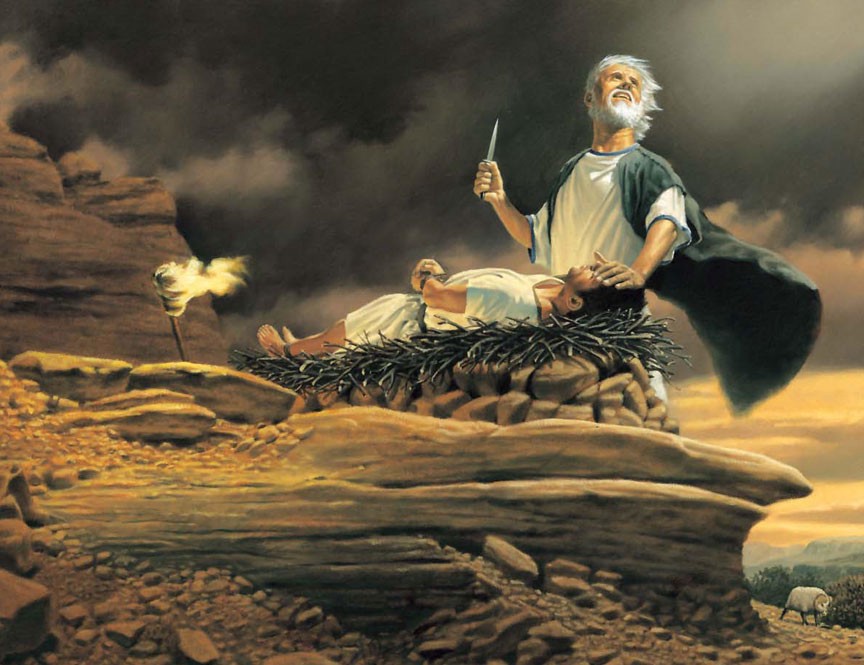
When looking at the offering of Isaac, we clearly see the parallels with Pesach. Abraham’s only begotten son is sent to the altar, to be a willing sacrifice, but at the last minute, Abraham looked behind him, and prophetically saw an image, the substitute for mankind: a ram that, instead of Isaac, would be the sacrifice.
Another parallel emerges from Abraham’s life. We all know that two goats form an integral part of Yom Kippur – the one is sacrificed and the other sent out into the wilderness, never to return, symbolising death. Abraham had two sons; Isaac was the one to be offered and Ishmael was the one sent out into the wilderness, never to return. Long before the details of Pesach and Yom Kippur were penned down in Lev 23, Abraham’s life illustrated to us the imagery of both the goats.
This led to the question: was Abraham a good father? Imagine you were his neighbour, watching him sending his first child out into the wilderness. Not long after this you saw him packing wood and walking off with two slaves and his son Isaac. The rumour spread quickly; he was going to sacrifice his son.
Would you have frowned at him? Of course you would. This is the danger we all face: jumping to conclusions with our limited insight into and knowledge of a situation. You see, by only looking in from the outside, you can judge Abraham as a cruel, uncaring father. But by knowing him intimately, you would have known that he would never have made the decision on his own. In both cases he acted in obedience to the Word of our Creator, our loving Father.
Being in a true relationship with the Father, Abraham trusted Him 100%, never doubting the fulfilment of His promises. Father said that through Isaac, the seed of Abraham would multiply. This could not happen if Isaac had died before he even had a wife. The answer is given to us in Heb. 11:17-19. Our Father has power over all, even life and death. If Isaac was to die, He would have restored him back to life to fulfil His promise.
Abraham knew that the Father was only GOOD, and that whatever happened as part of a walk of obedience, would lead to goodness, life and blessing.

- The Oath That Made a People : Nitzavim September 17, 2026A commentary on Parashah Nitzavim (Deuteronomy 29:9–30:20) Scripture quotations are from the American Standard Version (1901). Verse numbers in Deuteronomy follow the Hebrew text; English Bibles run one verse higher in this section. 1. Standing in a covenant that was sworn before you were born Nitzavim opens with Israel standing — nitzavim — […]
- Ha’azinu: Luister na die Lied van die Rots September 17, 2026Die naam Ha’azinu beteken “Luister!” Hierdie Torahgedeelte, Deuteronomium 32, bevat die lied wat Moses kort voor sy dood aan Israel geleer het. Dit herinner die volk aan YHVH se trou, waarsku hulle teen geestelike afvalligheid en eindig met die hoop op herstel en versoening. Moses begin deur sy woorde met reën en dou […]
- STAAN, KIES EN WANDEL : NITZAVIM – VAYELECH August 29, 2026Nitzavim–Vayelech : Deuteronomium 29:10–31:30 Hierdie week lees ons ’n dubbele Torah-gedeelte, Nitzavim en Vayelech, en saam bring hierdie twee gedeeltes ons by een van die aangrypendste oomblikke in die Torah. In Nitzavim–Vayelech staan Israel op die vlaktes van Moab. Die woestynreis is amper verby. Die Beloofde Land lê voor hulle. Moses weet dat […]
- WANNEER JY INKOM – KI TAVO August 24, 2026DIE KERN BOODSKAPPE VAN KI TAVO: Onthou waaruit YHVH jou gebring het, wees dankbaar vir waar Hy jou gebring het, en wanneer jy Sy seën binnestap, moenie die Gewer vergeet nie. Ki Tavo (כִּי־תָבוֹא) beteken “Wanneer jy inkom.” Israel staan op die punt om die Beloofde Land binne te gaan. Ná jare in […]
- WANNEER GELOOF DEEL WORD VAN JOU ALLEDAAGSE LEWE – KI TETZE August 16, 2026Ki Tetze (כִּי־תֵצֵא) beteken “Wanneer jy uittrek” of “Wanneer jy uitgaan.” Hierdie Torah-gedeelte bevat meer gebooie as enige ander porsie en raak ’n verstommende verskeidenheid aspekte van die alledaagse lewe aan: gesinsverhoudings, die huwelik, werk, geregtigheid, die versorging van kwesbares, eerlikheid in besigheid, goedheid teenoor diere en selfs die terugbesorging van iets wat verlore […]
- SHOFTIM – WIE REGEER MY HART? August 11, 2026Die woorde waarmee hierdie gedeelte begin, bly deur die eeue heen weerklink: “Geregtigheid, geregtigheid moet jy najaag.” Deuteronomium 16:20 Shoftim (שֹׁפְטִים) beteken “regters”. Israel staan op die drumpel van die Beloofde Land, en YHVH leer hulle dat dit nie genoeg is om die land bloot in besit te neem nie. Hulle moet daarin […]
- Kies Lewe deur die Koning te Volg – Parasha Re’eh August 5, 2026"Kyk (Re'eh), Ek hou vandag voor julle die seën en die vloek." (Deut 11:26) Die eerste woord van hierdie week se Parasha is Re'eh, wat beteken "Kyk!" Dit is merkwaardig dat Moses die volk in die enkelvoud aanspreek. Al staan die hele volk voor hom, spreek hy elke persoon individueel aan. Elkeen moes […]
- Walking in the Footsteps of Covenant – Ekev July 27, 2026The Hebrew word Ekev (עקב) literally means heel or because. It carries the beautiful picture of following in someone's footsteps. Just as a heel leaves a footprint behind, Israel was called to walk in the footsteps of YHVH's covenant. The blessings described in this parashah were not random rewards, but the natural fruit of […]
- The Heart That Hears : Va’etchanan July 20, 2026The name Va'etchanan, meaning "I pleaded" or "I earnestly sought favor," reflects Moses' heartfelt plea to YHVH from the plains of Moab, begging to enter the Promised Land. Despite Elohim's loving refusal, Moses, rather than dwelling on his disappointment, dedicates his final days to preparing the Israelites for a future he will not witness. […]
- From Tears to Hope : The month of Av July 16, 2026The month of Av is one of the most significant months on the biblical calendar. At first glance it seems to be marked by sorrow, yet beneath its ashes lies a remarkable promise of restoration. Historically, the Ninth of Av (Tisha B'Av) became a day associated with national tragedy. Jewish tradition remembers that […]