Let all bitterness, and wrath, and displeasure, and uproar, and slander be put away from you, along with all evil. And be kind towards one another, tenderhearted, forgiving one another, as Elohim also forgave you in Messiah. (Ephesians 4:31 -32)
In the Torah portion Vayigash (Gen44:18-47:27), we encounter the first account of forgiveness, demonstrated by one of our patriarchs. Joseph forgives his brothers. A family with a lot of relationship turmoil is restored in a very emotional display.
During the course of our relationships, it is quite common for us to encounter feelings of hurt or offense caused by those who are closest to us. This is just a natural part of the dynamics that exist within relationships. After all, we are all unique individuals with diverse backgrounds, each carrying our own set of scars from past hurts that unfortunately shape our reactions and viewpoints.
However, the more we dwell on and nurture our hurts or offenses, the greater the chance that bitterness will take control. It is crucial to address bitterness promptly, or else it will intensify and engulf you.
The root of bitterness can be traced back to the tree of unforgiveness. It is from this bitterness that hatred, knowingly or unknowingly, grows and gradually consumes our hearts. As mentioned in Matthew 13:34 and Luke 6:45, our words reflect what lies within us.
When we allow bitterness to take hold, slanderous remarks effortlessly flow from our mouths, and sin accumulates, growing like a snowball until it eventually becomes an overwhelming avalanche.
It’s important to note that sharing these negative feelings with others is considered slander, which not only harms us but can also have a devastating impact on the entire community. Seeing that we know that slander is a deadly sin, we cover slander with attractive spiritual coatings; like sharing, seeking counsel and more.
The key to effectively handling bitterness is by practicing forgiveness, forgetting, and reconciliation. It is important to proactively strive to mend the relationship as quickly as possible. Do not withdraw and build walls with bricks made from the clay of negative feelings. Keep in mind that addressing bitterness promptly leads to better outcomes. Ephesians 4:26-27 offers guidance, saying, “Be angry, yet do not sin; do not let your anger linger until the next day, and do not give the devil a chance.” We must avoid allowing bitterness and animosity to linger disguised as hurt and grievances on a daily basis.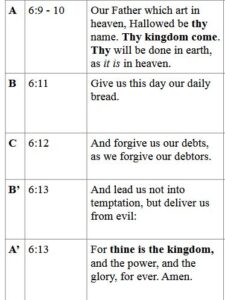
The Lord’s prayer emphasizes the significance of forgiveness. The prayer in Matt 6 does not only include the words “ and forgive us our sins, as we have forgiven those who have sinned against us” It is the pivot or central piece of the Prayer. (see included diagram)
Directly after the Amen in verse 13 , our Master emphasize the importance by addressing forgiveness again in verses 14-15 “ For if ye forgive men their trespasses, your heavenly Father will also forgive you. But if ye forgive not men their trespasses, neither will your Father forgive your trespasses.”
Selah (Pause)
Here we all need a long pause for these words from the mouth of our Master to sink in, a silent pause with inwards focus, without looking for reasons or excuses.
Our Master teaches us that the extent to which we forgive others will determine the extent to which we are forgiven. Therefore, it is crucial for us to be both capable and willing to forgive one another and not make excuses for not doing it.
This demands an overwhelming understanding of forgiveness and a consistent practice of it in our daily lives.
To truly understand God forgives, we must reflect on His actions through Messiah. His forgiveness is rooted in His boundless grace, given to us completely. It is a forgiveness that upholds justice and is given upon us continuously.
Imagine where we would be if He would say :
I forgive you, but I do not want to spend time with you again
I forgive you, but will never trust you again
I forgive you, but will never break bread with you again
I forgive you, but I will never again consider you my friend
I forgive you, but I will warn all close to me about you
(Look at the example He lived out in His relationship with Peter)
His forgiveness is not a get out of jail free ticket, it does not mean that we can live a reckless life. It is a precious gift to cherish and share. A gift that must inspire us to put down behaviour that can cause other hurt, as well as learnt behaviour that cause us to see all as personal and hurtful. In short, we must deal with issues that can harm relationships on the giving and receiving end.
It is not our good deeds that will cause God to forgive us our mistakes. It is not the feel-good moments that are emphasized here. It is not our accomplishments, what we achieved, in life. It is forgiving others that will allow the redemptive blood to be brushed on the doorposts of our hearts.
Let us never forget Hebrews 12:15 “See to it that no one falls short of the favor of Elohim, that no root of bitterness springing up causes trouble, by which many become defiled,”
May we not be ruined in our battle against bitterness. But live a life in contrast with the world’s norms of forgiveness. Believing that He will enable us to truly forgive , empower us to restore broken trust and relationships.
For this will empower us to live lives to the Glory of our Master!


- Noach: Through the Waters Toward Restoration October 10, 2026Central message: YHVH judges a world filled with violence, preserves life through Noach, and renews His covenant purpose. Yet the flood changes the world without changing the human heart. Humanity still needs more than another beginning—it needs inward renewal through Yeshua. The Original Setting Parashat Noach contains three major movements: The flood: Creation […]
- B’reisheet: From Darkness to Eden October 5, 2026B’reisheet introduces the great storyline of Scripture: Elohim creates a good world, humanity is called to bear His image, sin brings exile and death, yet YHVH immediately begins revealing His plan of redemption and restoration through Yeshua. The Original Setting B’reisheet contains several foundational events: Elohim creates the heavens and the earth. Light […]
- The Oath That Made a People : Nitzavim September 17, 2026A commentary on Parashah Nitzavim (Deuteronomy 29:9–30:20) Scripture quotations are from the American Standard Version (1901). Verse numbers in Deuteronomy follow the Hebrew text; English Bibles run one verse higher in this section. 1. Standing in a covenant that was sworn before you were born Nitzavim opens with Israel standing — nitzavim — […]
- Ha’azinu: Luister na die Lied van die Rots September 17, 2026Die naam Ha’azinu beteken “Luister!” Hierdie Torahgedeelte, Deuteronomium 32, bevat die lied wat Moses kort voor sy dood aan Israel geleer het. Dit herinner die volk aan YHVH se trou, waarsku hulle teen geestelike afvalligheid en eindig met die hoop op herstel en versoening. Moses begin deur sy woorde met reën en dou […]
- STAAN, KIES EN WANDEL : NITZAVIM – VAYELECH August 29, 2026Nitzavim–Vayelech : Deuteronomium 29:10–31:30 Hierdie week lees ons ’n dubbele Torah-gedeelte, Nitzavim en Vayelech, en saam bring hierdie twee gedeeltes ons by een van die aangrypendste oomblikke in die Torah. In Nitzavim–Vayelech staan Israel op die vlaktes van Moab. Die woestynreis is amper verby. Die Beloofde Land lê voor hulle. Moses weet dat […]
- WANNEER JY INKOM – KI TAVO August 24, 2026DIE KERN BOODSKAPPE VAN KI TAVO: Onthou waaruit YHVH jou gebring het, wees dankbaar vir waar Hy jou gebring het, en wanneer jy Sy seën binnestap, moenie die Gewer vergeet nie. Ki Tavo (כִּי־תָבוֹא) beteken “Wanneer jy inkom.” Israel staan op die punt om die Beloofde Land binne te gaan. Ná jare in […]
- WANNEER GELOOF DEEL WORD VAN JOU ALLEDAAGSE LEWE – KI TETZE August 16, 2026Ki Tetze (כִּי־תֵצֵא) beteken “Wanneer jy uittrek” of “Wanneer jy uitgaan.” Hierdie Torah-gedeelte bevat meer gebooie as enige ander porsie en raak ’n verstommende verskeidenheid aspekte van die alledaagse lewe aan: gesinsverhoudings, die huwelik, werk, geregtigheid, die versorging van kwesbares, eerlikheid in besigheid, goedheid teenoor diere en selfs die terugbesorging van iets wat verlore […]
- SHOFTIM – WIE REGEER MY HART? August 11, 2026Die woorde waarmee hierdie gedeelte begin, bly deur die eeue heen weerklink: “Geregtigheid, geregtigheid moet jy najaag.” Deuteronomium 16:20 Shoftim (שֹׁפְטִים) beteken “regters”. Israel staan op die drumpel van die Beloofde Land, en YHVH leer hulle dat dit nie genoeg is om die land bloot in besit te neem nie. Hulle moet daarin […]
- Kies Lewe deur die Koning te Volg – Parasha Re’eh August 5, 2026"Kyk (Re'eh), Ek hou vandag voor julle die seën en die vloek." (Deut 11:26) Die eerste woord van hierdie week se Parasha is Re'eh, wat beteken "Kyk!" Dit is merkwaardig dat Moses die volk in die enkelvoud aanspreek. Al staan die hele volk voor hom, spreek hy elke persoon individueel aan. Elkeen moes […]
- Walking in the Footsteps of Covenant – Ekev July 27, 2026The Hebrew word Ekev (עקב) literally means heel or because. It carries the beautiful picture of following in someone's footsteps. Just as a heel leaves a footprint behind, Israel was called to walk in the footsteps of YHVH's covenant. The blessings described in this parashah were not random rewards, but the natural fruit of […]