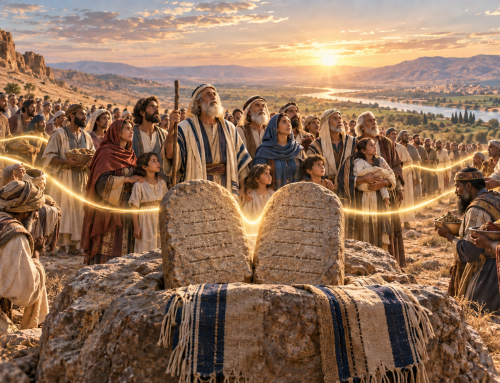
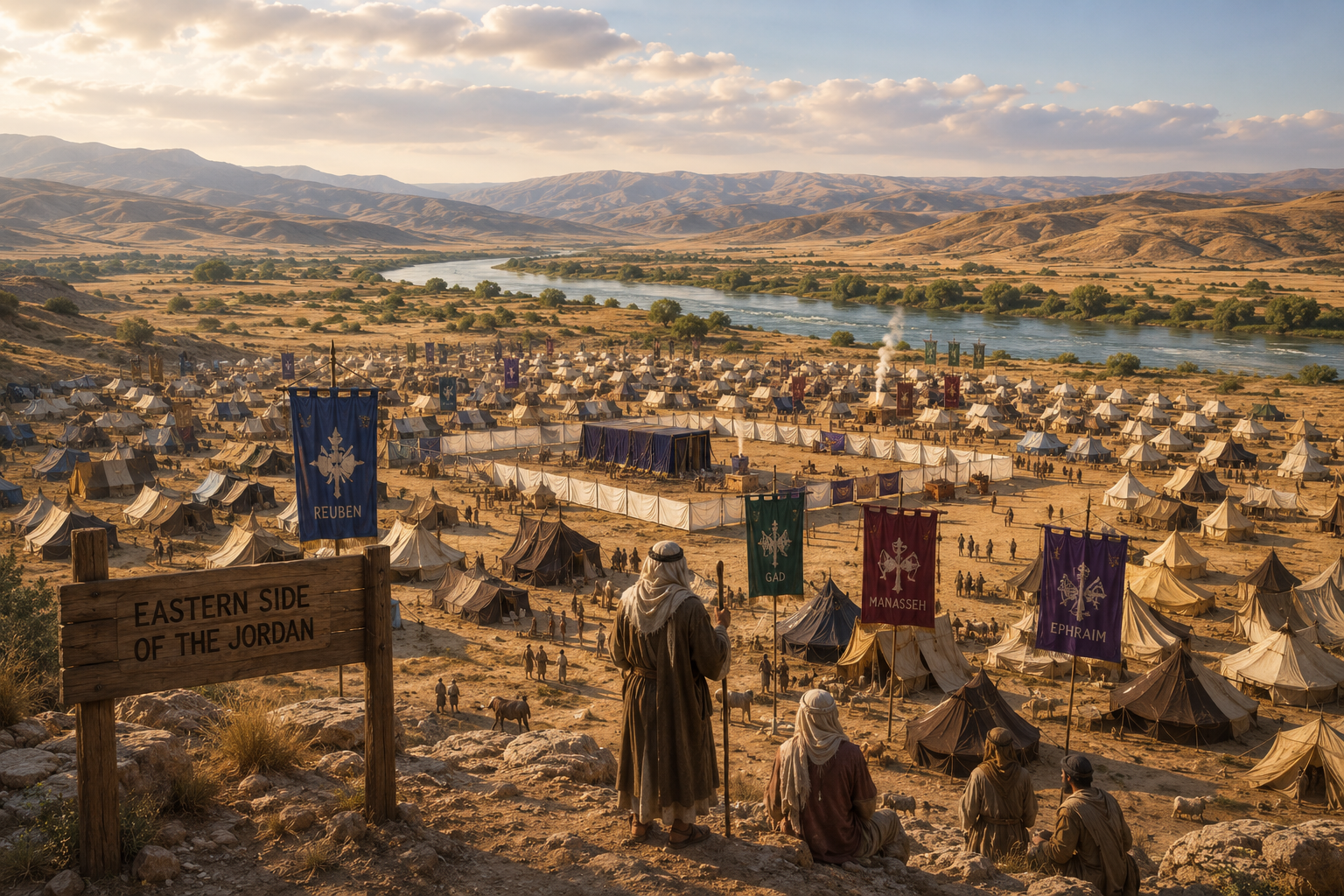
As the book of Devarim (Deuteronomy) begins, Israel stands on the eastern side of the Jordan River. The wilderness journey is nearly complete. A new generation is poised to enter the Promised Land, but before crossing over, Moses pauses.
Instead of delivering military orders, he starts with a sermon. Before Israel can claim their inheritance, they must first remember the journey that led them there.
“These are the words which Moses spoke to all Israel…” (Deuteronomy 1:1)
The Hebrew name Devarim translates to “Words.” This name serves as a reminder that our future is shaped by the divine words of Elohim. Moses goes beyond simply recounting Israel’s past; he interprets it through the lens of YHVH’s unwavering faithfulness. Each triumph, each setback, and every pause in the wilderness journey becomes a vital lesson for the generations to come.
One particular event is highlighted again: the mission of the twelve spies. Their lack of faith led to an entire generation being denied entry into the Promised Land (Deuteronomy 1:19-46). The problem was never the size of the giants, but the smallness of Israel’s faith. Fear spoke louder than the promises of YHVH.
This theme echoes powerfully in the New Testament. The writer of Hebrews looks back to this same event and urges believers not to harden their hearts as Israel did in the wilderness. Through Messiah Yeshua we are invited into Elohim’s rest, but that invitation must be embraced with faith (Hebrews 3:7-19; 4:1-11). The wilderness generation saw miracles yet failed to trust. Followers of Yeshua are called to trust the One who has already secured the greater redemption.
There is another beautiful connection. Moses, knowing he will not enter the land, faithfully prepares others to continue the mission. In a similar way, Yeshua spent His final days preparing His disciples before His ascension. Both leaders understood that true leadership equips the next generation rather than clinging to the present.
Devarim also reminds us of the importance of remembering. Throughout Scripture, forgetting leads to compromise, while remembering leads to covenant faithfulness. Yeshua continued this pattern when He said at His final Passover meal, “Do this in remembrance of Me.” Our faith grows stronger as we remember the faithfulness of Elohim throughout history and in our own lives.
We all stand at a kind of Jordan River today.
Behind us lie seasons of testing, victories, failures, and lessons learned. Ahead lies the unknown. Before we rush forward, Devarim invites us to pause, remember, and listen once more to the words of YHVH. The same Elohim who carried Israel through the wilderness still leads His people today.
May we not be remembered as those who allowed fear to delay the promises of Elohim, but as those who trusted His Word, followed Messiah Yeshua wholeheartedly, and stepped forward in faith into every inheritance He has prepared.
All to the glory of our King!!

- B’reisheet: From Darkness to Eden October 5, 2026B’reisheet introduces the great storyline of Scripture: Elohim creates a good world, humanity is called to bear His image, sin brings exile and death, yet YHVH immediately begins revealing His plan of redemption and restoration through Yeshua. The Original Setting B’reisheet contains several foundational events: Elohim creates the heavens and the earth. Light […]
- The Oath That Made a People : Nitzavim September 17, 2026A commentary on Parashah Nitzavim (Deuteronomy 29:9–30:20) Scripture quotations are from the American Standard Version (1901). Verse numbers in Deuteronomy follow the Hebrew text; English Bibles run one verse higher in this section. 1. Standing in a covenant that was sworn before you were born Nitzavim opens with Israel standing — nitzavim — […]
- Ha’azinu: Luister na die Lied van die Rots September 17, 2026Die naam Ha’azinu beteken “Luister!” Hierdie Torahgedeelte, Deuteronomium 32, bevat die lied wat Moses kort voor sy dood aan Israel geleer het. Dit herinner die volk aan YHVH se trou, waarsku hulle teen geestelike afvalligheid en eindig met die hoop op herstel en versoening. Moses begin deur sy woorde met reën en dou […]
- STAAN, KIES EN WANDEL : NITZAVIM – VAYELECH August 29, 2026Nitzavim–Vayelech : Deuteronomium 29:10–31:30 Hierdie week lees ons ’n dubbele Torah-gedeelte, Nitzavim en Vayelech, en saam bring hierdie twee gedeeltes ons by een van die aangrypendste oomblikke in die Torah. In Nitzavim–Vayelech staan Israel op die vlaktes van Moab. Die woestynreis is amper verby. Die Beloofde Land lê voor hulle. Moses weet dat […]
- WANNEER JY INKOM – KI TAVO August 24, 2026DIE KERN BOODSKAPPE VAN KI TAVO: Onthou waaruit YHVH jou gebring het, wees dankbaar vir waar Hy jou gebring het, en wanneer jy Sy seën binnestap, moenie die Gewer vergeet nie. Ki Tavo (כִּי־תָבוֹא) beteken “Wanneer jy inkom.” Israel staan op die punt om die Beloofde Land binne te gaan. Ná jare in […]
- WANNEER GELOOF DEEL WORD VAN JOU ALLEDAAGSE LEWE – KI TETZE August 16, 2026Ki Tetze (כִּי־תֵצֵא) beteken “Wanneer jy uittrek” of “Wanneer jy uitgaan.” Hierdie Torah-gedeelte bevat meer gebooie as enige ander porsie en raak ’n verstommende verskeidenheid aspekte van die alledaagse lewe aan: gesinsverhoudings, die huwelik, werk, geregtigheid, die versorging van kwesbares, eerlikheid in besigheid, goedheid teenoor diere en selfs die terugbesorging van iets wat verlore […]
- SHOFTIM – WIE REGEER MY HART? August 11, 2026Die woorde waarmee hierdie gedeelte begin, bly deur die eeue heen weerklink: “Geregtigheid, geregtigheid moet jy najaag.” Deuteronomium 16:20 Shoftim (שֹׁפְטִים) beteken “regters”. Israel staan op die drumpel van die Beloofde Land, en YHVH leer hulle dat dit nie genoeg is om die land bloot in besit te neem nie. Hulle moet daarin […]
- Kies Lewe deur die Koning te Volg – Parasha Re’eh August 5, 2026"Kyk (Re'eh), Ek hou vandag voor julle die seën en die vloek." (Deut 11:26) Die eerste woord van hierdie week se Parasha is Re'eh, wat beteken "Kyk!" Dit is merkwaardig dat Moses die volk in die enkelvoud aanspreek. Al staan die hele volk voor hom, spreek hy elke persoon individueel aan. Elkeen moes […]
- Walking in the Footsteps of Covenant – Ekev July 27, 2026The Hebrew word Ekev (עקב) literally means heel or because. It carries the beautiful picture of following in someone's footsteps. Just as a heel leaves a footprint behind, Israel was called to walk in the footsteps of YHVH's covenant. The blessings described in this parashah were not random rewards, but the natural fruit of […]
- The Heart That Hears : Va’etchanan July 20, 2026The name Va'etchanan, meaning "I pleaded" or "I earnestly sought favor," reflects Moses' heartfelt plea to YHVH from the plains of Moab, begging to enter the Promised Land. Despite Elohim's loving refusal, Moses, rather than dwelling on his disappointment, dedicates his final days to preparing the Israelites for a future he will not witness. […]