Famine marks the start of the chapter, while the harvest signifies its end. Between these moments, we see more than just survival; we witness a return.
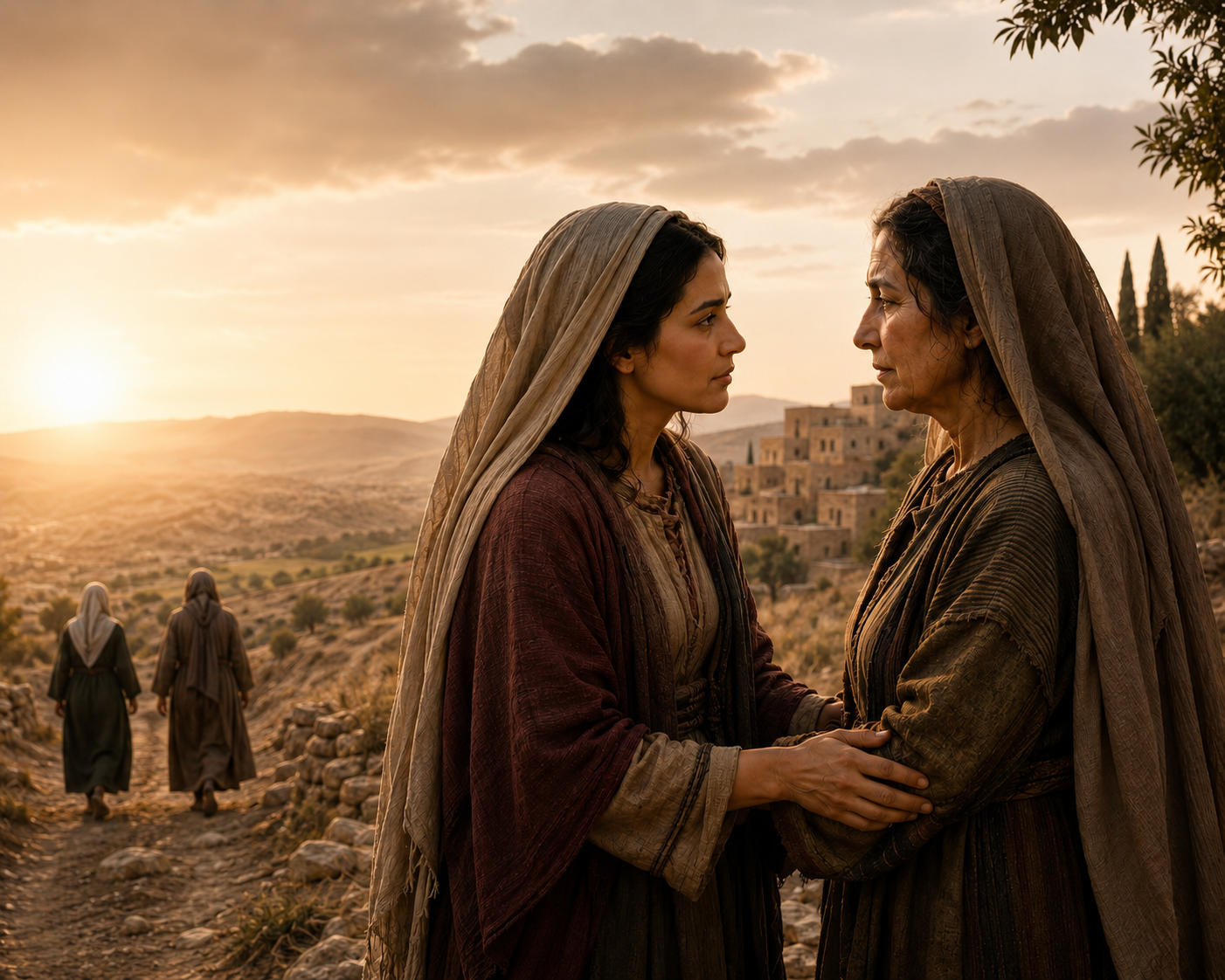
Even though Bethlehem is known as the “house of bread,” Naomi had to leave during a time of famine. In Moab, loss intensifies: her husband passes away, her sons perish, and her future appears to fade into silence. The quest for sustenance leads to a void. But upon hearing that יהוה has brought bread to His people again, she rises and returns.
Ruth, a native of Moab, finds herself at a crossroads. She has the option of staying with what she knows or making a commitment to something she hasn’t entirely comprehended. Her words carry the weight of surrender:
“Your people shall be my people, and your Elohim (God) my Elohim (God).”
This signifies more than loyalty to Naomi; it declares identity and faith. Ruth gives up her past, her land, and her security in order to embrace the Elohim (God) of Israel. She serves as a prophetic symbol of nations being drawn closer, reflecting the promise that those once distant are now brought near.
Returning with a sense of emptiness, Naomi even renames herself Mara, a name that means bitter. Nevertheless, the heavens reveal a contrasting narrative. The chapter concludes with a subtle yet impactful detail: their arrival coincides with the start of the barley harvest (First Fruits). Our Creator has already begun what Naomi cannot yet perceive.
Ruth 1 reminds us that redemption often begins in return:
- Return to the presence of our Creator
- Return to covenant identity
- Return to the “house of bread”
In the Messiah, this picture is completely fulfilled. Yeshua, who was born in Bethlehem, proclaims that He is the Bread of Life. What started as scarcity now promises unending abundance.
The call to return remains, even when life seems utterly empty.
Because in the place of return, Father is already preparing the harvest.

- The Oath That Made a People : Nitzavim September 17, 2026A commentary on Parashah Nitzavim (Deuteronomy 29:9–30:20) Scripture quotations are from the American Standard Version (1901). Verse numbers in Deuteronomy follow the Hebrew text; English Bibles run one verse higher in this section. 1. Standing in a covenant that was sworn before you were born Nitzavim opens with Israel standing — nitzavim — […]
- Ha’azinu: Luister na die Lied van die Rots September 17, 2026Die naam Ha’azinu beteken “Luister!” Hierdie Torahgedeelte, Deuteronomium 32, bevat die lied wat Moses kort voor sy dood aan Israel geleer het. Dit herinner die volk aan YHVH se trou, waarsku hulle teen geestelike afvalligheid en eindig met die hoop op herstel en versoening. Moses begin deur sy woorde met reën en dou […]
- STAAN, KIES EN WANDEL : NITZAVIM – VAYELECH August 29, 2026Nitzavim–Vayelech : Deuteronomium 29:10–31:30 Hierdie week lees ons ’n dubbele Torah-gedeelte, Nitzavim en Vayelech, en saam bring hierdie twee gedeeltes ons by een van die aangrypendste oomblikke in die Torah. In Nitzavim–Vayelech staan Israel op die vlaktes van Moab. Die woestynreis is amper verby. Die Beloofde Land lê voor hulle. Moses weet dat […]
- WANNEER JY INKOM – KI TAVO August 24, 2026DIE KERN BOODSKAPPE VAN KI TAVO: Onthou waaruit YHVH jou gebring het, wees dankbaar vir waar Hy jou gebring het, en wanneer jy Sy seën binnestap, moenie die Gewer vergeet nie. Ki Tavo (כִּי־תָבוֹא) beteken “Wanneer jy inkom.” Israel staan op die punt om die Beloofde Land binne te gaan. Ná jare in […]
- WANNEER GELOOF DEEL WORD VAN JOU ALLEDAAGSE LEWE – KI TETZE August 16, 2026Ki Tetze (כִּי־תֵצֵא) beteken “Wanneer jy uittrek” of “Wanneer jy uitgaan.” Hierdie Torah-gedeelte bevat meer gebooie as enige ander porsie en raak ’n verstommende verskeidenheid aspekte van die alledaagse lewe aan: gesinsverhoudings, die huwelik, werk, geregtigheid, die versorging van kwesbares, eerlikheid in besigheid, goedheid teenoor diere en selfs die terugbesorging van iets wat verlore […]
- SHOFTIM – WIE REGEER MY HART? August 11, 2026Die woorde waarmee hierdie gedeelte begin, bly deur die eeue heen weerklink: “Geregtigheid, geregtigheid moet jy najaag.” Deuteronomium 16:20 Shoftim (שֹׁפְטִים) beteken “regters”. Israel staan op die drumpel van die Beloofde Land, en YHVH leer hulle dat dit nie genoeg is om die land bloot in besit te neem nie. Hulle moet daarin […]
- Kies Lewe deur die Koning te Volg – Parasha Re’eh August 5, 2026"Kyk (Re'eh), Ek hou vandag voor julle die seën en die vloek." (Deut 11:26) Die eerste woord van hierdie week se Parasha is Re'eh, wat beteken "Kyk!" Dit is merkwaardig dat Moses die volk in die enkelvoud aanspreek. Al staan die hele volk voor hom, spreek hy elke persoon individueel aan. Elkeen moes […]
- Walking in the Footsteps of Covenant – Ekev July 27, 2026The Hebrew word Ekev (עקב) literally means heel or because. It carries the beautiful picture of following in someone's footsteps. Just as a heel leaves a footprint behind, Israel was called to walk in the footsteps of YHVH's covenant. The blessings described in this parashah were not random rewards, but the natural fruit of […]
- The Heart That Hears : Va’etchanan July 20, 2026The name Va'etchanan, meaning "I pleaded" or "I earnestly sought favor," reflects Moses' heartfelt plea to YHVH from the plains of Moab, begging to enter the Promised Land. Despite Elohim's loving refusal, Moses, rather than dwelling on his disappointment, dedicates his final days to preparing the Israelites for a future he will not witness. […]
- From Tears to Hope : The month of Av July 16, 2026The month of Av is one of the most significant months on the biblical calendar. At first glance it seems to be marked by sorrow, yet beneath its ashes lies a remarkable promise of restoration. Historically, the Ninth of Av (Tisha B'Av) became a day associated with national tragedy. Jewish tradition remembers that […]